

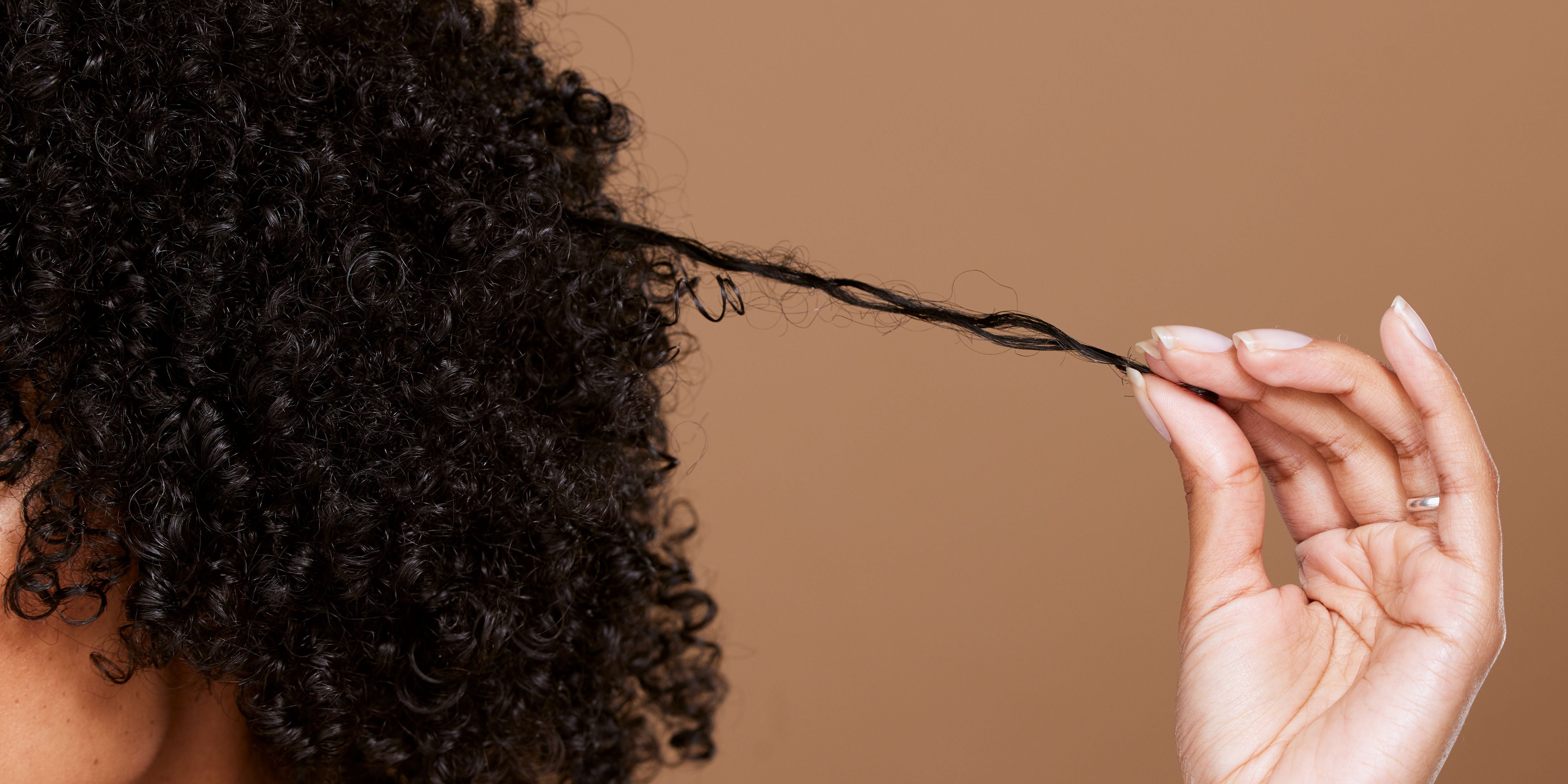
Black women’s hair is diverse, complex, and structured in a way that requires specific understanding for proper care. It cannot be defined by a single texture or pattern. Instead, it exists across a spectrum of curl types, most commonly categorized within Type 3 (curly) and Type 4 (coily) hair. Each category reflects a different curl structure, which directly impacts moisture retention, strength, and styling behavior.
Type 3 hair is characterized by visible curls that form loops or spirals. Within this category, Type 3A presents loose, large curls with a naturally soft appearance. Type 3B has more defined and tighter ringlets, often with increased volume. Type 3C features dense, tightly packed corkscrew curls. While Type 3 hair generally retains more moisture than coily hair, it can still become dry and requires consistent hydration and gentle handling to maintain definition and prevent frizz.
Type 4 hair is the most common among Black women and is defined by tight coils or a zig-zag pattern. Type 4A has small, clearly defined coils with a spring-like structure. Type 4B presents a less defined, angular pattern, often appearing more fluffy than curly. Type 4C is the tightest and most fragile, with minimal visible curl definition and significant shrinkage. Due to the structure of coily hair, natural oils from the scalp do not easily travel down the hair shaft, making this hair type more prone to dryness and breakage if not properly maintained.
Beyond curl pattern, additional factors play a critical role in understanding Black hair. Porosity determines how well the hair absorbs and retains moisture, influencing product selection and hydration techniques. Density refers to the number of hair strands on the scalp and affects how full the hair appears, as well as how products should be distributed. Strand thickness, whether fine, medium, or coarse, impacts the hair’s strength and its response to manipulation and styling.
Proper care of Black hair requires a focus on moisture retention, low manipulation, and protective practices. This includes the use of conditioning treatments, appropriate styling methods, and avoiding excessive heat or tension. Understanding these structural differences allows for more effective routines and supports the long-term health of the hair.
Black women’s hair is not defined by limitation but by variation. Each texture requires a tailored approach based on its characteristics. Knowledge of these differences is essential for maintaining healthy hair and for building informed beauty practices.